Zimbabwe Safari: Africa’s Untamed Wilderness Awaits
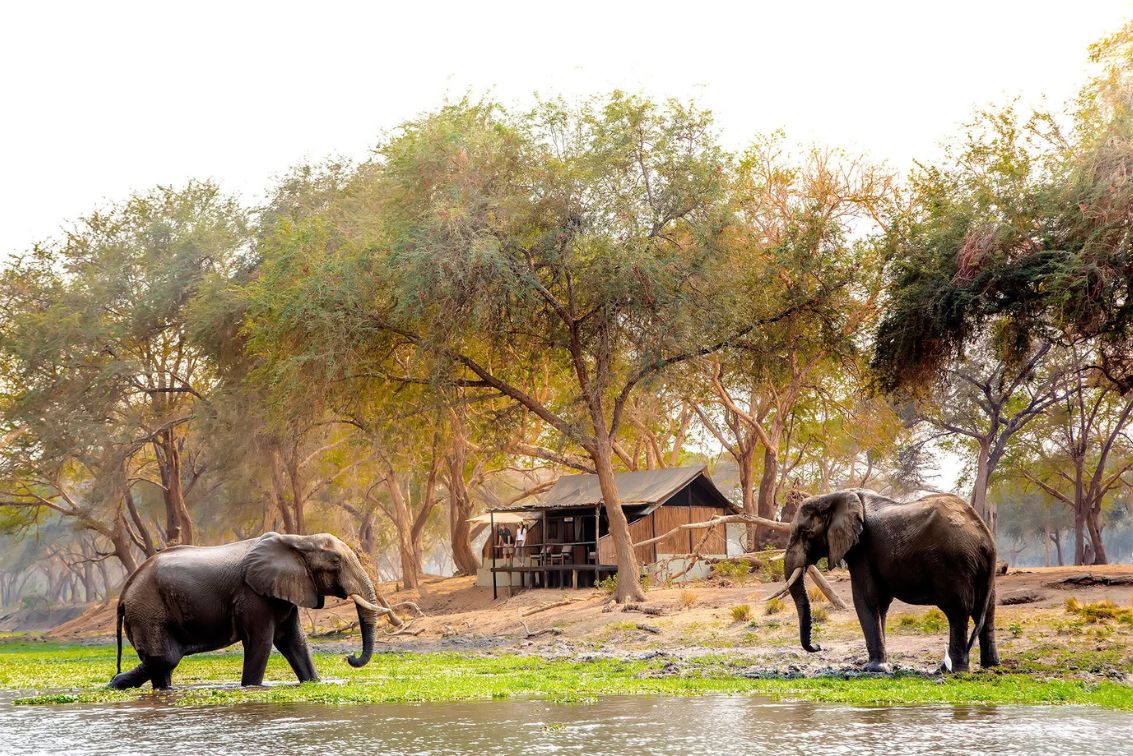
Zimbabwe is one of Africa’s best-kept safari secrets. Renowned for its spectacular wildlife, expert guiding, and uncrowded national parks, it offers an authentic safari experience that feels wild, intimate, and unforgettable. Whether you’re watching elephants gather along the Zambezi River, tracking lions on foot, or standing in awe of the mighty Victoria Falls, Zimbabwe promises adventures that stay with you long after you’ve returned home.
Zimbabwe is ideally located for multi-country holidays. It combines seamlessly with Botswana’s Chobe National Park and Okavango Delta, Zambia’s South Luangwa National Park, Namibia’s Caprivi Strip, or South Africa’s Kruger National Park, making it an excellent addition to any Southern African itinerary.
Why Choose Zimbabwe for a Safari?
Unlike some of Africa’s busier safari destinations, Zimbabwe offers a more exclusive and immersive experience. The country’s parks are less crowded, allowing visitors to enjoy incredible wildlife sightings without the long queues of safari vehicles. Whether you’re seeking thrilling safari adventures, iconic natural wonders, or authentic cultural encounters, Zimbabwe offers something for every traveller.
While Zimbabwe has experienced economic and political challenges over the years, tourism remains one of the country’s most important industries and visitors continue to travel safely to its major tourist destinations. National parks, safari lodges, and tourism operators are well-established and experienced in welcoming international guests, providing high standards of service and hospitality.
Practical Travel Information
English is widely spoken throughout Zimbabwe, making travel straightforward for international visitors. Major tourist areas are well connected by domestic flights and road transfers, while safari lodges provide seamless travel arrangements.
Zimbabwe uses a mix of payment methods. US Dollars (USD) are widely accepted throughout the tourism industry and are the preferred currency for most visitors. Credit cards are accepted at many hotels, lodges, and larger businesses, although travellers should carry some cash for smaller purchases, tipping, and remote areas where card facilities may be limited.
As with travel to many destinations, it is advisable to remain aware of your surroundings, follow local guidance, and use reputable tour operators and accommodation providers. Tourist regions are generally well prepared for international visitors and offer a comfortable and rewarding travel experience.
The Best Safari Destinations in Zimbabwe
Hwange National Park
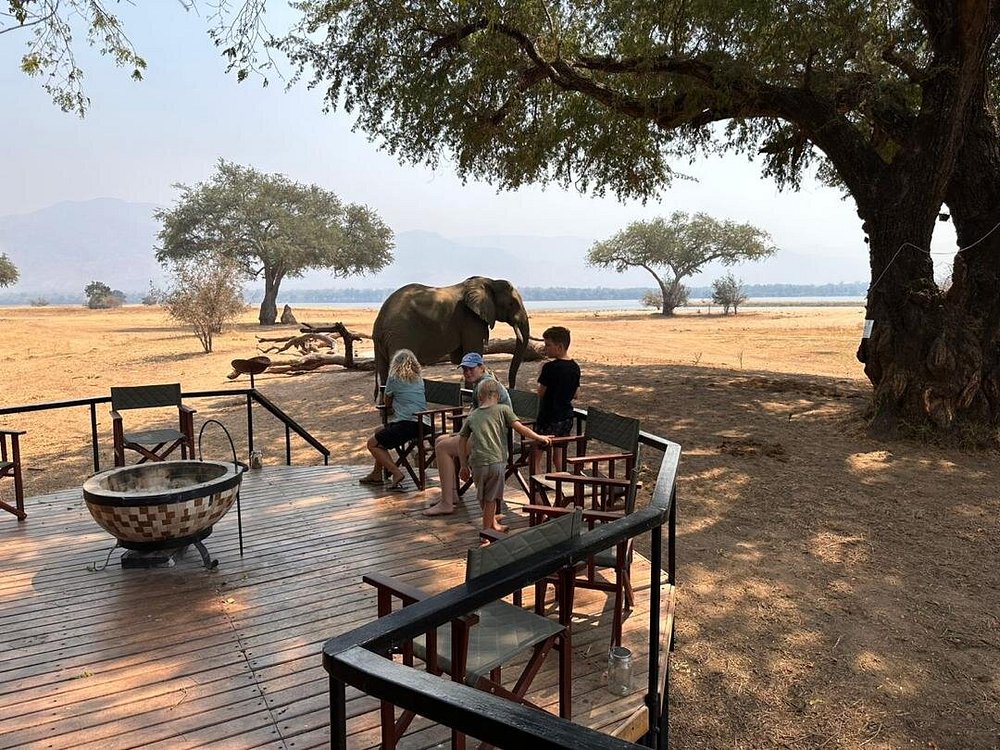
As Zimbabwe’s largest national park, it covers nearly 5,800 square miles (15,000 square kilometers) of varied terrain – but it’s not just the size that stands out. It’s also the peacefulness and the sheer concentration of wildlife. Once a hunting ground, Hwange was established as a national park in 1928 and has become one of Southern Africa’s key conservation areas. Its vast, varied landscapes – from open savannah and Kalahari sandveld to dense teak forests – support over 100 mammal species and nearly 400 bird species.
Hwange National Park is in west Zimbabwe. Its grasslands and mopane woods are home to large elephant herds, lions and African wild dogs. In the northwest, animals gather at Mandavu and Masuma dams, where there are concealed lookouts. Bumbusi National Monument includes 18th-century ruins and pre-colonial rock carvings. In the southeast, waterholes include the Nyamandhlovu Pan, with its elevated viewing platform
Hwange offers year-round game viewing, with the dry season (May to October) providing outstanding wildlife concentrations around the park’s famous waterholes.
Mana Pools National Park
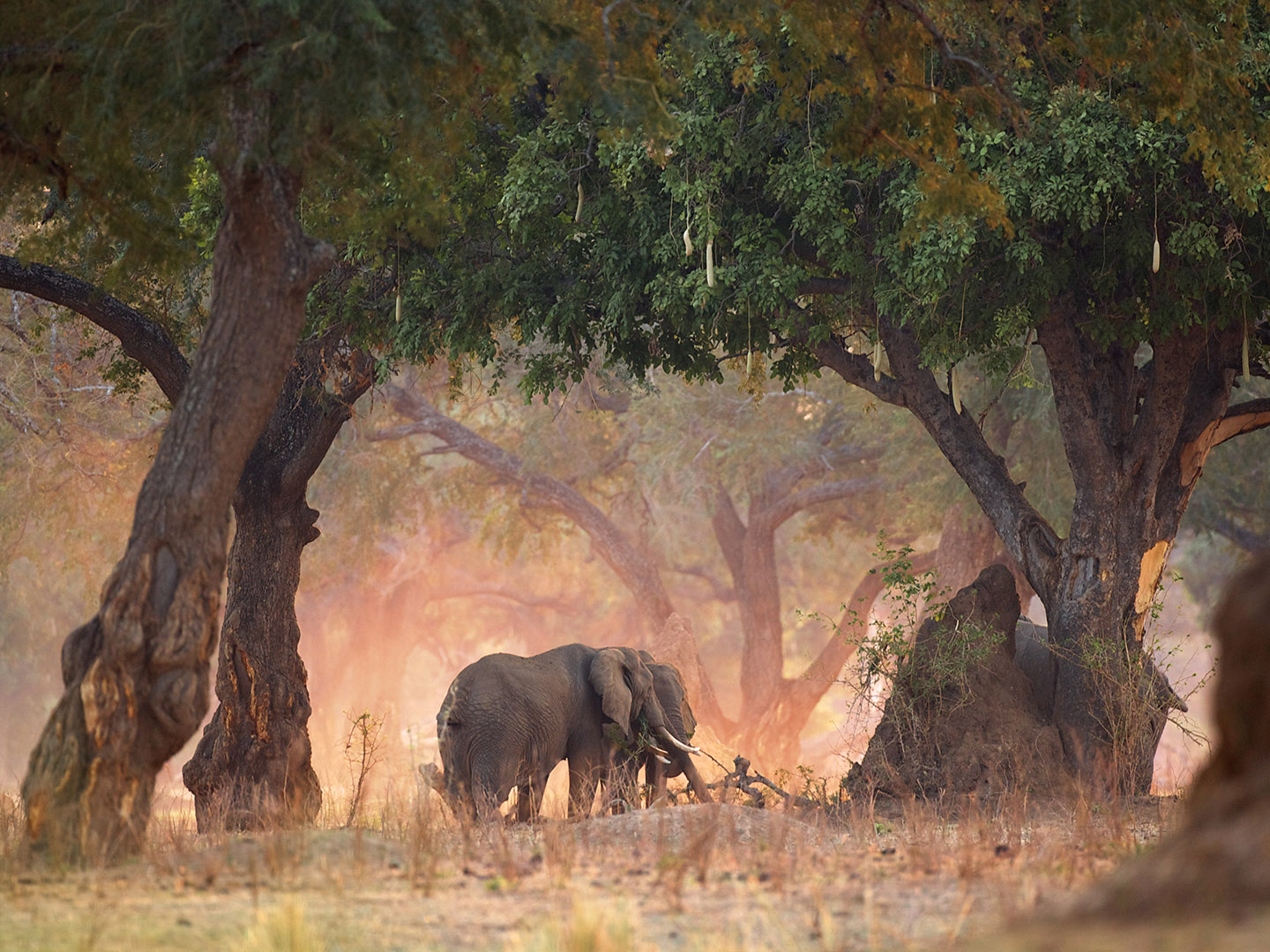
Mana Pools National Park sits on the Zambezi River and is known for its four permanent waterholes that attract huge numbers of animals, especially in the dry months of Amber Season. Elephants, buffalo, hippos, zebras, and antelope gather in large numbers, followed closely by predators like lions, leopards, cheetahs, and wild dogs. Birdwatchers will find over 400 species here, and the mix of dense wildlife and dramatic scenery makes it one of the best places in Africa for immersive, up-close sightings.
The park is famous for:
- It’s a UNESCO World Heritage Site, known for its raw beauty, open floodplains, and ancient forests.
- You can explore on foot or by canoe. Mana Pools is one of the few parks in Africa where walking and canoe safaris take center stage.
- It’s one of the best places in Africa to see endangered African wild dogs, especially during Amber Season.
- Wildlife viewing is exceptional, with elephants, lions, buffalo, and hippos gathering at the water’s edge.
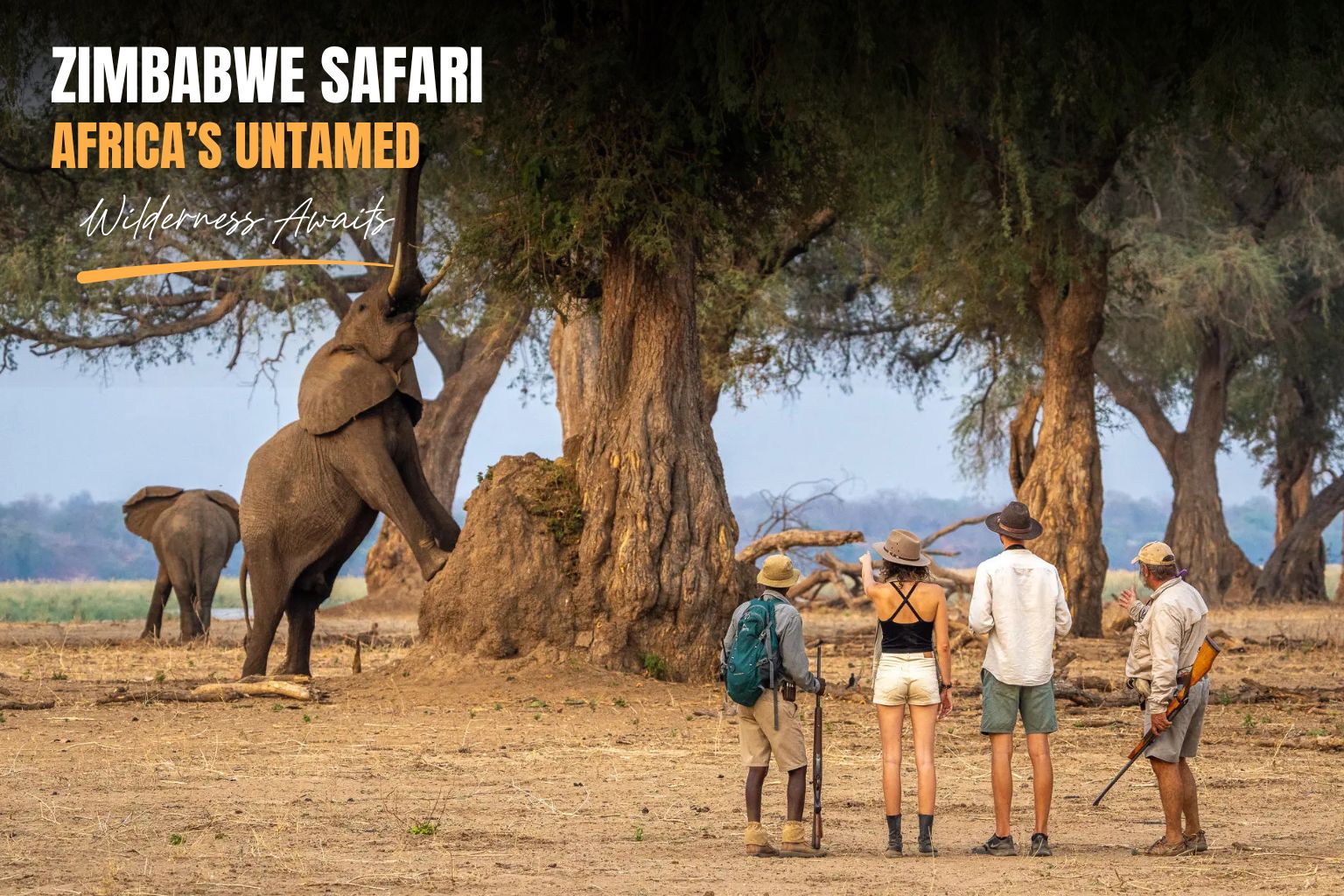
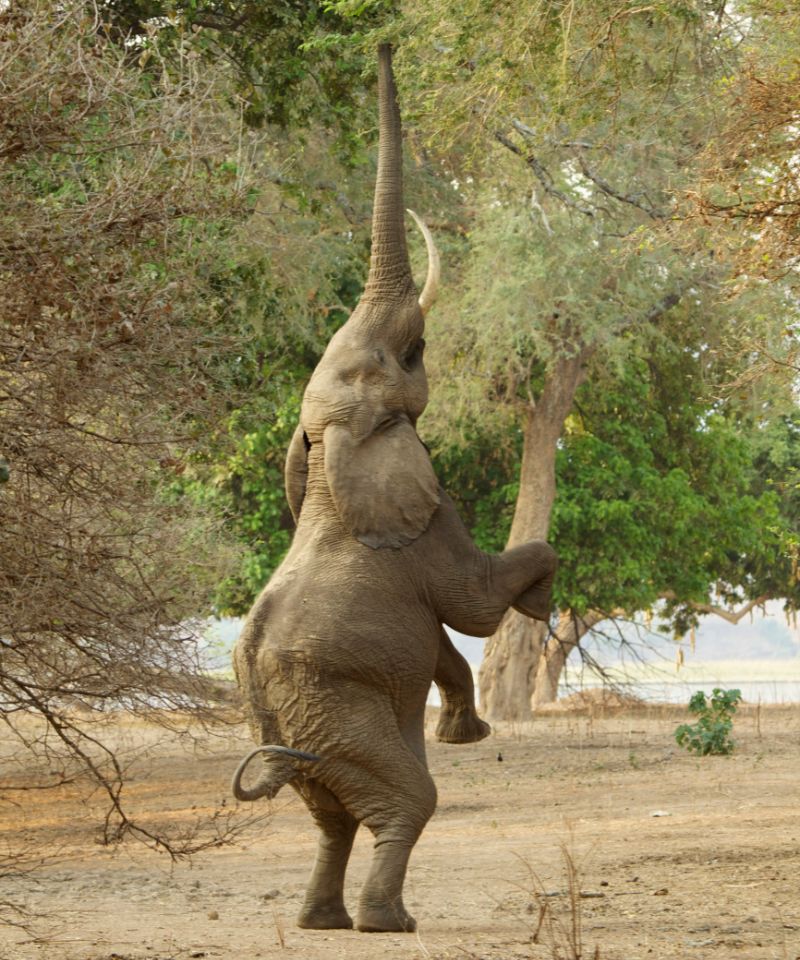
- You might witness elephants standing on two legs to feed. This is an extraordinary and rare behavior seen almost nowhere else.
Mana Pools offers a truly wild safari experience where nature remains largely untouched.
Victoria Falls
No Zimbabwe safari is complete without visiting Victoria Falls, one of the Seven Natural Wonders of the World.
Known locally as Mosi-oa-Tunya (“The Smoke That Thunders”), the falls create an unforgettable spectacle, especially during the high-water season.
Popular activities include:
- Scenic helicopter flights
- Sunset cruises on the Zambezi River
- White-water rafting
- Bungee jumping
- Guided rainforest walks
- Luxury river cruises
Victoria Falls also offers excellent accommodation ranging from boutique hotels to luxurious safari lodges.
Matusadona National Park
Bordered by Lake Kariba to the north and flanked by the perennial Ume and Sanyati Rivers, Matusadona National Park in Zimbabwe was proclaimed a National Park in 1975. Spanning 1,470 km², the park encompasses an exceptionally varied landscape, from the rugged Matusadona Mountains that give the park its name, to fertile valley-floor woodlands, open lakeshore grasslands, and critical aquatic breeding areas. This diversity of habitats provides important refuge for endangered species, sustaining a wide range of wildlife, including lion, leopard, elephant, buffalo, zebra, and several antelope species. Its waterways support healthy populations of hippo, crocodile, and numerous fish species, while nearly 400 recorded bird species reflect the park’s exceptional ecological richness and vitality.
In 2019, Zimbabwe Parks and Wildlife Management Authority (PWMA) partnered with African Parks in a 20-year management agreement for Matusadona National Park – the first mandate for African Parks in Zimbabwe – with the vision to revitalise the park for wildlife and communities. Since then, a holistic management approach that includes good governance, effective conservation law enforcement, community engagement initiatives, and species reintroductions has begun the restoration and conservation of this important landscape.
Gonarezhou National Park
Gonarezhou National Park, as the area is known today, has an incredibly rich and turbulent history from early human settlements by the Shangaan (Tsonga) people, to the ivory trade, later becoming a game reserve in 1935 before being proclaimed a National Park in 1975.
Gonarezhou is in the remote southeast corner of Zimbabwe on the border with Mozambique, with which it shares a 100 km boundary. The park forms an integral part of one of the largest conservation areas in the world- the Greater Limpopo Transfrointier Park (GLTP), established in 2002. GLTP joins some of the iconic national parks of Zimbabwe, Mozambique, and South Africa.
The Park, known as “the place of elephants”, is home to over 11,500 of these gentle giants, one of the highest densities of pachyderms in any protected area in Africa. History talks of elephants taller than the trees and whilst this may be a stretch – several uniquely impressive individuals still roam the wilderness of Gonarezhou, descendants of the famed bulls of yesteryear such as “Dhulamiti” (the one who is taller than the trees).
Apart from being “the place of elephants”, Gonarezhou is home to a rich diversity of species with several unique and range limited species. The Park is home to over 450 species of birds, 89 large mammal species, 61 small mammals, over 50 fish species, 116 identified reptile species and 34 amphibian species. Of these species, some 15 are classified as vulnerable, 6 endangered and 5 as critically endangered species.
Lake Kariba
Stretching along the border between Zimbabwe and Zambia, Lake Kariba is one of the world’s largest man-made lakes and one of Southern Africa’s most scenic destinations. Created by the damming of the mighty Zambezi River in the late 1950s, the lake spans over 280 km (174 miles), offering breathtaking sunsets, tranquil waters, and exceptional wildlife viewing.
Lake Kariba is renowned for its unique combination of safari, fishing, and relaxation. Its vast shoreline is home to elephants, buffalo, hippos, crocodiles, and a rich variety of birdlife, while nearby Matusadona National Park provides outstanding game viewing. Wildlife frequently gathers along the water’s edge, making boat-based safaris an unforgettable way to experience the region.
One of the lake’s greatest attractions is its luxury houseboats, which allow visitors to explore hidden bays and islands while enjoying comfortable accommodation, freshly prepared meals, and spectacular scenery. Sunset cruises are a highlight, with the silhouettes of flooded trees creating some of Africa’s most iconic landscapes.
Lake Kariba is also considered one of the world’s premier destinations for catching the powerful tigerfish, attracting anglers from around the globe. Other activities include game drives, guided walking safaris, birdwatching, kayaking, and visits to local fishing communities.
Whether you’re seeking a peaceful escape, an unforgettable fishing adventure, or a unique safari experience on the water, Lake Kariba offers a slower pace of travel and a completely different perspective on Zimbabwe’s natural beauty. It is an ideal addition to a Zimbabwe safari, combining wilderness, wildlife, and relaxation in one extraordinary destination.
Gonarezhou National Park
Hwange National Park
Mana Pools National Park
Victoria Falls
Matusadona National Park
Lake Kariba
Best Time to Visit Zimbabwe
May to October (Dry Season)
- Excellent wildlife viewing
- Mild temperatures
- Ideal for walking safaris
- Peak safari season
November to April (Green Season)
- Lush landscapes
- Outstanding birdwatching
- Baby animals
- Fewer tourists
- Great photographic opportunities
Victoria Falls is at its fullest between February and May, while lower water levels later in the year reveal more of the dramatic rock formations.
Why Zimbabwe Should Be Your Next Safari Destination
Zimbabwe delivers everything travellers dream of when imagining an African safari—abundant wildlife, breathtaking scenery, world-class guiding, and unforgettable adventures. From the vast elephant herds of Hwange to the untamed beauty of Mana Pools and the awe-inspiring power of Victoria Falls, every destination offers something unique.
If you’re looking for an authentic safari away from the crowds, Zimbabwe is a destination that consistently exceeds expectations. Whether you’re planning your first African adventure or returning for another unforgettable journey, Zimbabwe offers experiences that are both deeply personal and truly extraordinary.
Start planning your Zimbabwe safari today and discover why this remarkable country remains one of Africa’s most rewarding wildlife destinations.